
Gos and Mabel Compared
H is for HawkThe parallel between White’s damaged training of Gos and Helen’s evolving work with Mabel reveals how care can either repeat or resist coercion.
increasing Bearing strength in each event
 decreasing
Bearing strength in each eventdecreasingTwo Captive Arrivals
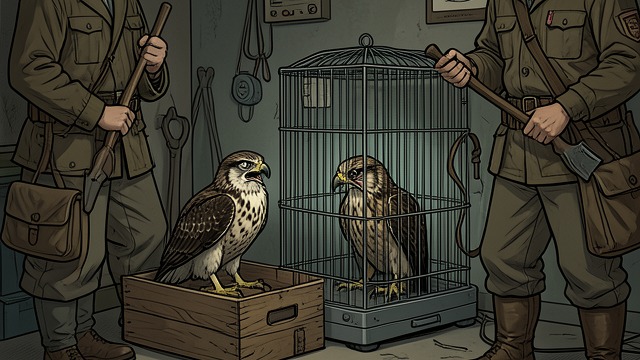
Different Beginnings
A Wild Nestling
Gos is taken from a nest in Germany and delivered through a long chain of human transfers. White tries to imagine what this journey has meant to the young hawk.
A Captive-Bred Bird
Mabel is bred in an aviary and collected by Helen from a Scottish quay. She is also frightened by transport, but begins her life with Helen in the care of a breeder experienced in handling her.
The contrasting arrivals establish two forms of human responsibility.
The Meaning of Patience
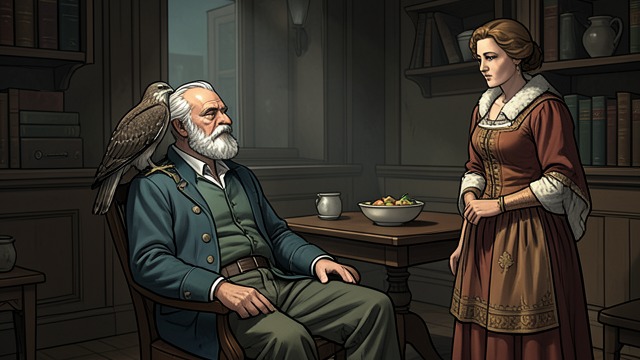
Patience or Endurance
White’s Vigil
White treats watching as an ordeal of sleepless endurance, believing that his own suffering may help tame Gos. The method confuses a test of the man with the needs of the bird.
Helen’s Stillness
Helen learns to become unobtrusive and let Mabel approach food without threat. Her stillness is a practical response to the hawk’s fear rather than a contest of wills.
The same word, watching, conceals opposing ideas of care.
Training as a Contest
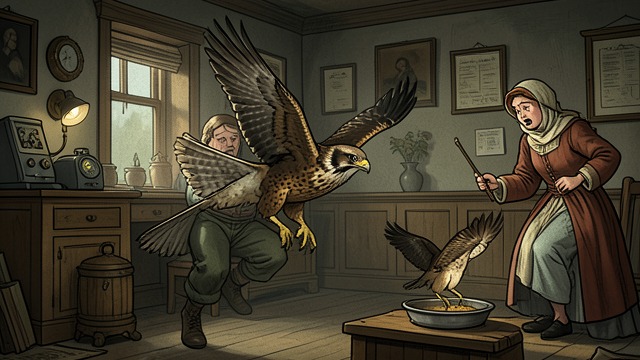
Fear Meets Fear
A Retreating Falconer
When Gos finally flies toward White, White’s fear of the hawk makes him duck away. The bird’s confusion reflects the instability of a lesson organized around White’s courage.
A Guided Return
Helen uses short, repeated calling lessons and adjusts Mabel’s food and weight with help from Stuart. The training still carries anxiety, but its practical steps are responsive to the hawk.
The contrast is not perfection against failure; it is attention against imposed ordeal.
The Broken Line
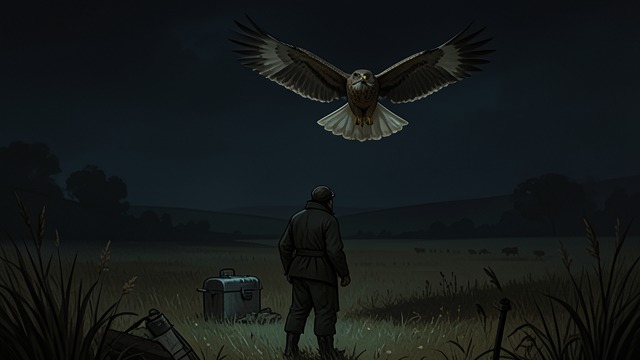
Freedom Mismanaged
Gos Escapes
White’s poor tether snaps after Gos has become tangled and frightened. The escape begins in negligence and ends in uncertainty, leaving White unable to decide whether the hawk is free or doomed.
Helen Lets Go
Helen removes Mabel’s restraint for the first time under difficult conditions. The hawk circles in darkness and returns, revealing both the danger of freedom and the possibility of trust.
The parallel turns release into a test of responsibility rather than simple triumph.
From Mastery to Partnership
Changing the Relationship
The Cost of Possession
White’s longing for mastery contributes to the damage done to Gos. Helen realizes that grief has also encouraged her to make Mabel serve as a mirror of her needs.
A More Separate Life
Helen accepts that Mabel’s perception and desires are not hers. She can love the hawk without converting her into a symbol or demanding that the bird heal her.
The comparison resolves not by condemning all training, but by asking what kind of relationship training creates.
White’s 1936 training and Helen’s later collection of Mabel
the first days of each hawk’s training
during White’s unsuccessful calling lessons
late summer in White’s story, before Helen’s first free flight
near the ending, after Helen recognizes her projection
